
Grain marketing in January: planning for the year ahead
2-MINUTE READ
January is the perfect time to take stock. Winter crops are established and there is space to make clear, rational decisions about both your unsold grain and your new crop. When it comes to grain marketing, this month is less about prediction and more about preparation.
Trying to second-guess the market is a high-risk approach. No one knows with certainty where prices are heading. Rather, you need to know what you will do if the market goes up, down or sideways. January is the time to ensure that structure is in place.
Old crop decisions should not contaminate new crop thinking. Each crop faces different market conditions and should serve different strategic goals within your business.
Frustration with harvest 2025 prices should not push you into overly defensive or overly aggressive positions on harvest 2026. Treat them as two separate commercial decisions, each with its own logic.
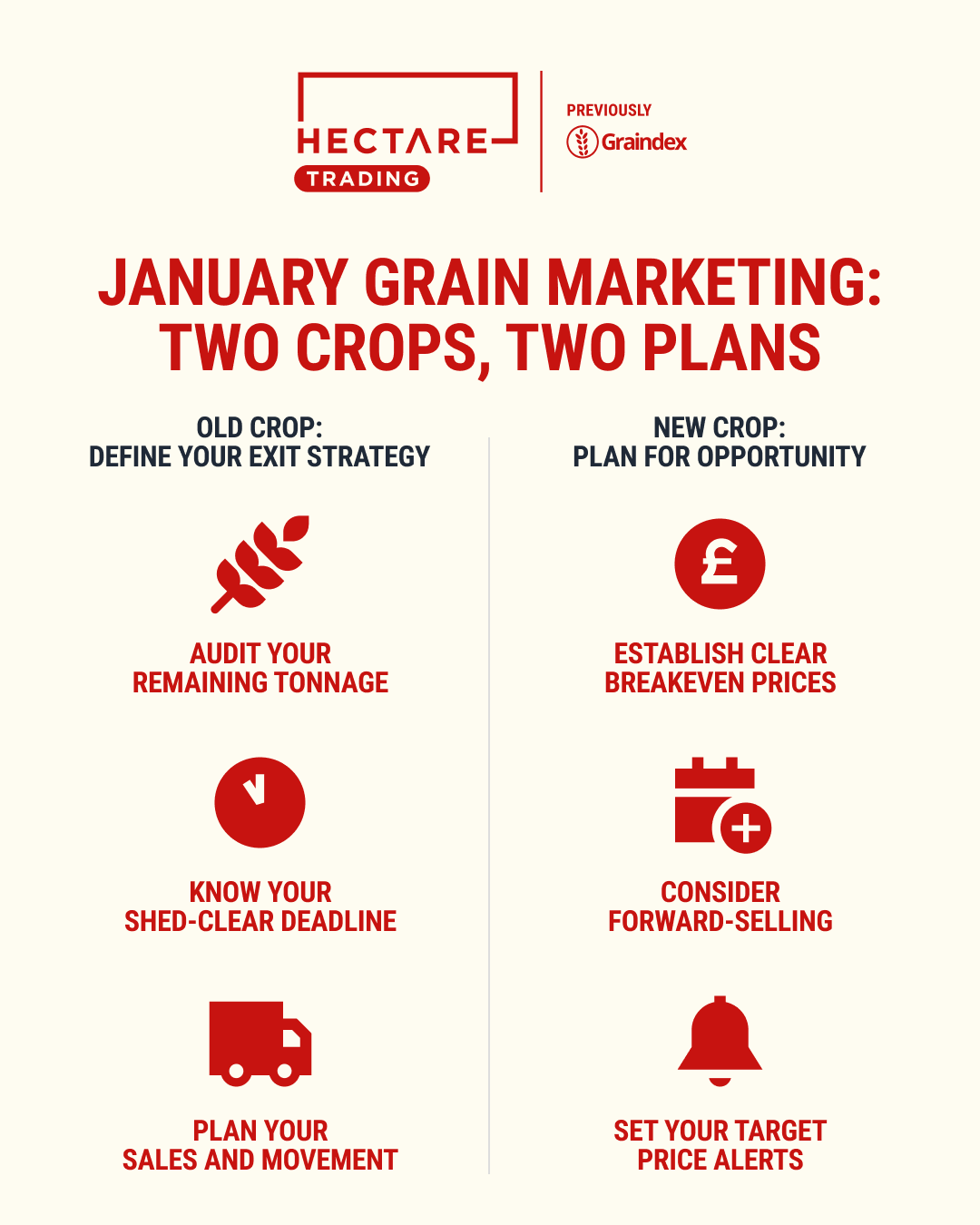
Keep your old and new crop commercial decisions separate
Be clear on your exit strategy for harvest 2025
If you are carrying unsold grain from harvest 2025, now’s the time to refine your exit strategy.
Audit your remaining tonnage by crop and quality. Be explicit about your storage, handling and finance costs and your minimum acceptable prices.
One critical factor is when you need the shed to be clear. Leaving this to the last minute can force reactive selling into unfavourable markets. Knowing your latest practical movement date gives you a framework for decision-making rather than a looming deadline.
Note down your plan for strategic selling this winter, whether that’s to sell all your old crop by a certain date or to sell in tranches for movement over a longer timeframe. Locking in prices now with forward contracts can help secure a few extra pounds per tonne while maintaining logistical flexibility.
January can be a challenging month. It is easy to stay anchored to a previous year’s prices, particularly if selling now means accepting a loss on paper. But if you choose to hold grain, that should be a deliberate commercial position, not inertia.
Sitting tight and waiting for a spring rally is still a decision, and often an expensive one once storage and opportunity costs are taken into account.
Plan ahead for harvest 2026
January is also the ideal time to clarify your grain marketing plans for harvest 2026.
If you have not already done so, define your cost of production and breakeven price per crop. If you already have budgets in place, revisit them now that some of your variable costs have been realised.
As your winter crops have become established, think how this might affect your yield expectations and your overall position.
Forward-selling a proportion of your new crop now can reduce your market risk, giving protection against sudden price drops. It also helps ease pressure during the busy harvest period.
Establish clear price targets per crop that work for your cost base. By setting price alerts on Hectare Trading you can stay on top of the market even when you’re out in the field.
You don’t have to sell grain in January, but you should decide under what conditions you would. Knowing your triggers in advance removes emotion from the decision when markets move quickly.
Your January checklist
☐ Know exactly how much old crop you have
☐ Update your costs
☐ Have a written exit plan for unsold grain
☐ Know your harvest 2026 breakevens
☐ Set clear price targets and alerts
January isn’t about timing the market perfectly. It’s about putting yourself in a position where good opportunities can be acted on quickly, calmly and with confidence – whatever the year ahead brings.
Put your old and new crop strategies into place with Hectare Trading. Check out our live view of the grain market and post your own free crop listing.
This article is for general information only and is not an instruction to trade. While we make every effort to ensure the accuracy of the content at the time of publication, Hectare Trading makes no guarantee regarding the data provided.