
3-MINUTE READ
You can spend a lot of time watching the market and looking for the right price, but without a clear picture of your own position, it’s difficult to know what action makes sense in the long term.
Good grain marketing involves more than securing a decent price on a particular load. You should understand how each sale fits into the bigger picture of your farm’s cropping, cash-flow and marketing objectives. Here are the five key aspects to monitor.
1. Know what you’ve sold – and what you’ve still got to sell
It’s surprisingly easy for grain sales to become fragmented across different buyers, contracts, pools and marketing channels.
Keep a running record of sales and commitments across all routes to market. Distinguish between grain already sold and grain still exposed to the market, and monitor remaining tonnage crop by crop. This helps avoid accidentally overcommitting or leaving more grain unpriced than intended.
For example, a farm growing 5,000 tonnes of feed wheat might have sold 1,500 tonnes at harvest, forward-sold 1,000 tonnes for January delivery and committed another 500 tonnes through a pool. With 2,000 tonnes still to market, having all these commitments in one place makes it much easier to understand the farm’s overall exposure.
This is all the more important when you’re tracking your current position on several different crops at once – all feeding into your overall profitability.
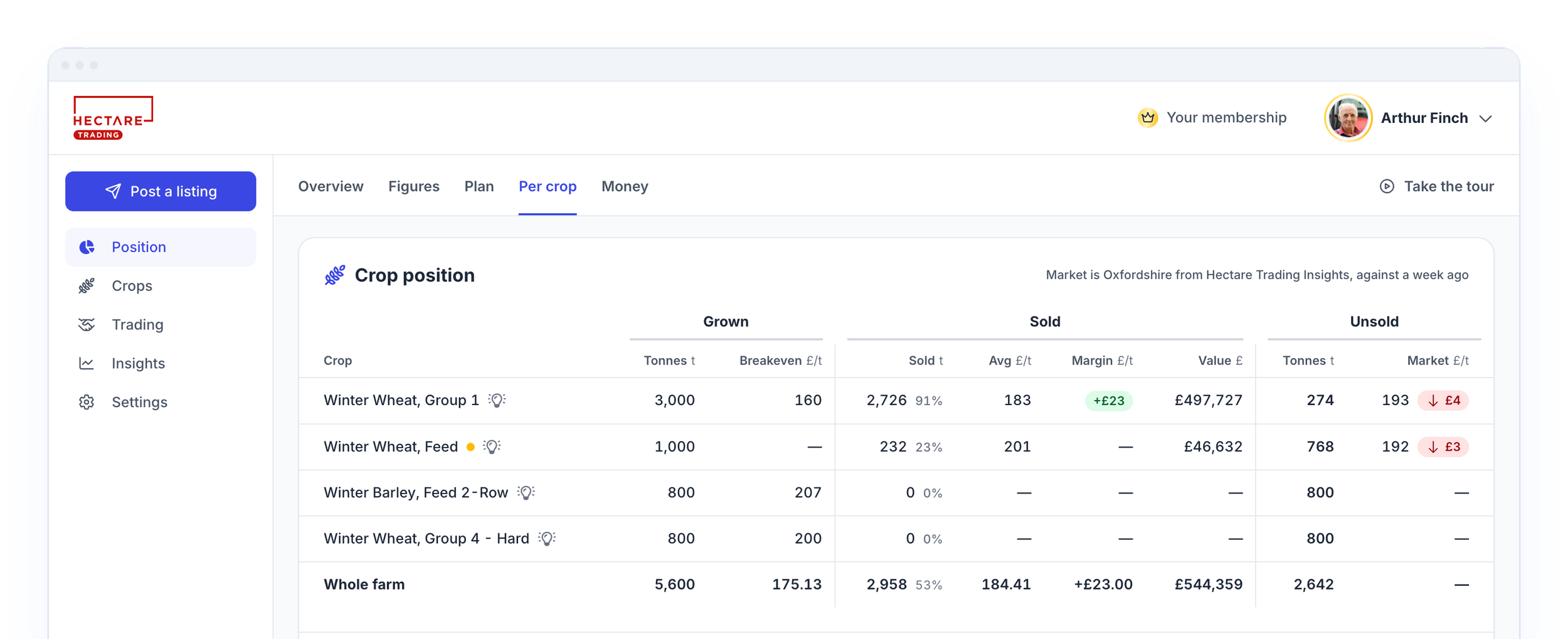
Keep a record of sold and unsold tonnage per crop
2. Know what your remaining grain is worth
In a volatile market, the value of unsold grain can change significantly from one week to the next. Assess remaining stocks against current local ex-farm prices, rather than relying solely on national market benchmarks.
Monitor how the value of unsold grain changes over time and compare current prices with your original expectations and marketing targets. Remember, however, that the market value of remaining grain is not the same as the profit you will ultimately make.
3. Monitor your breakeven and target prices
What looks attractive for one farm might be unprofitable for another, depending on production costs, yields and overheads.
Calculate breakeven prices using actual production costs and realistic yield expectations. Set selling targets that reflect the farm’s financial requirements, then monitor the market against these figures. Targets should also be reviewed as circumstances change.
Consider the margin achieved on grain already sold, as well as the potential margin on remaining stocks. A strong price on one crop doesn't necessarily mean the overall marketing position is where it needs to be.
4. Have a plan for marketing the whole crop
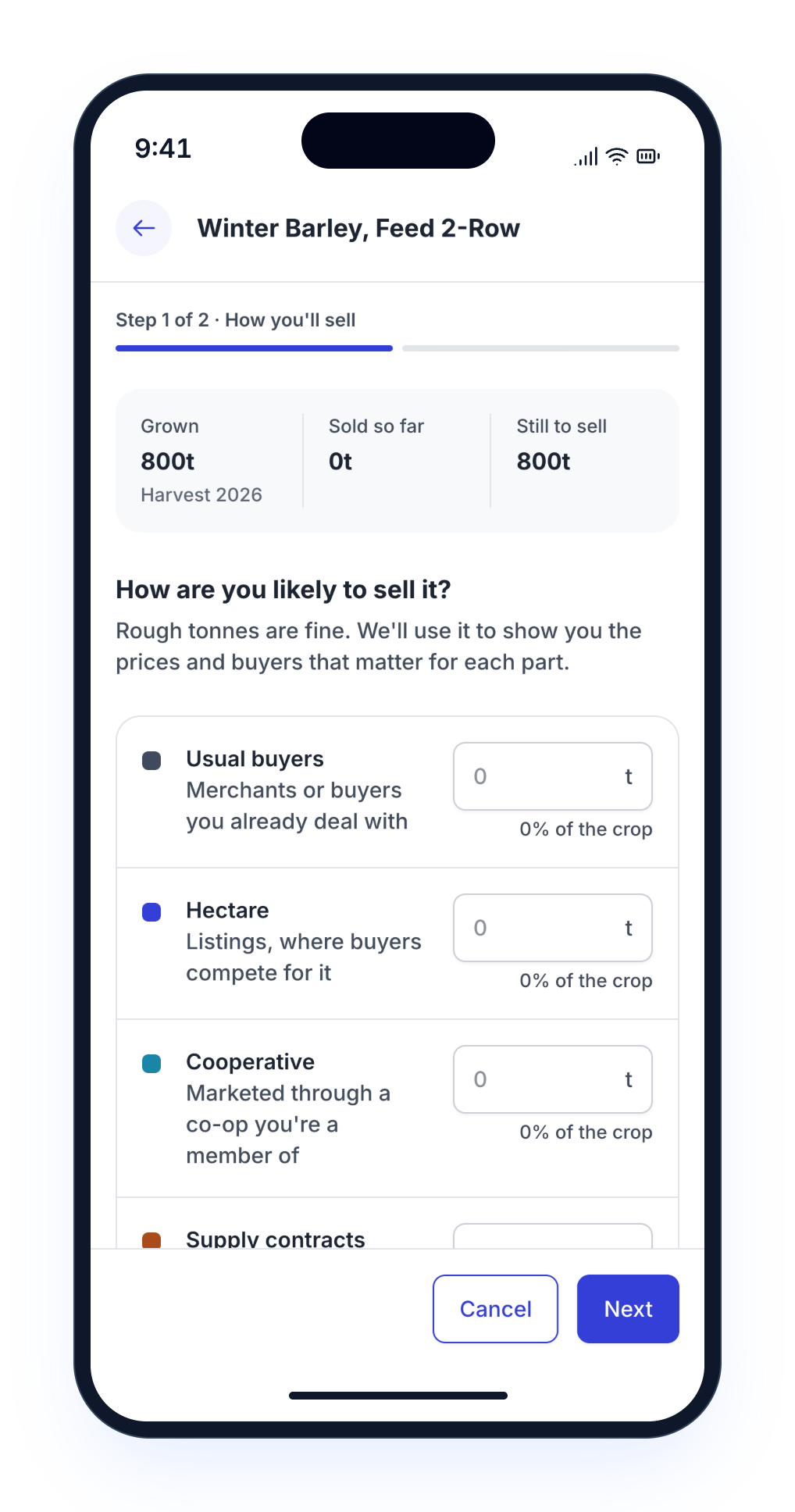
This might involve selling a proportion of expected production before or during harvest, spreading sales across different months to manage price risk, or using forward contracts to secure carry on old crop or lock in prices on new crop.
The right approach will depend on individual circumstances and market conditions. Whatever plan you choose, it’s important to work towards an overall strategy for marketing your harvest.
5. Don’t overlook cash flow and fulfilment
Grain marketing doesn’t end when a price is agreed. Payments, deliveries and outstanding commitments all affect the farm’s financial position.
Keep track of when payments are due, identify overdue payments and follow them up. Monitor outstanding deliveries and movement commitments, and understand how expected grain income fits into your monthly cash-flow requirements.
Bringing your grain position together
Keeping track of sales, remaining tonnage, market values, margins and outstanding commitments can be hard, particularly when you market grain through several different routes.
Hectare Trading’s new Position dashboard brings this information together, giving you a live crop-by-crop view of what’s been sold, what’s left and what your remaining grain is worth at current local market prices.
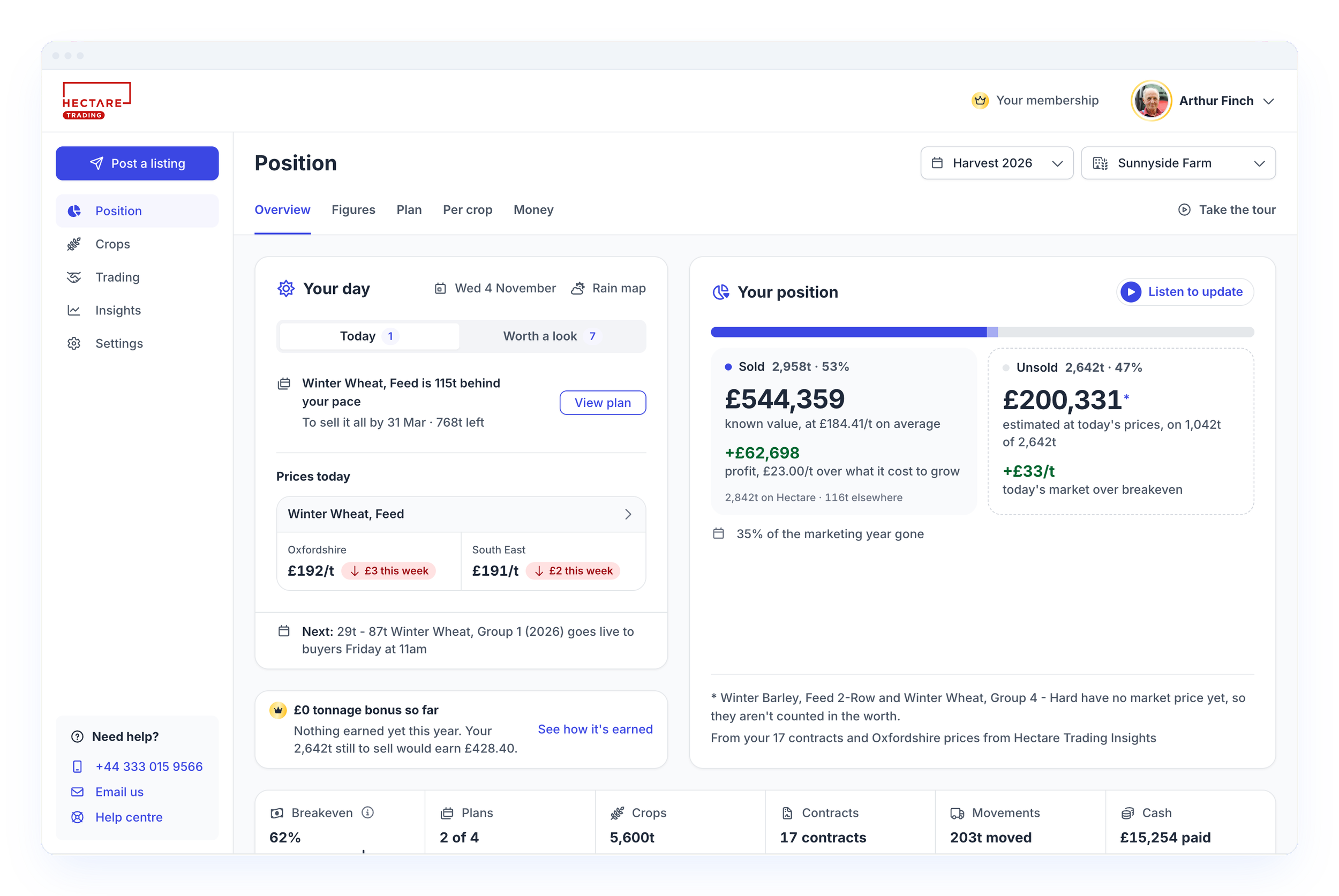
Track your live position per crop
It also shows how each crop is performing against breakeven and target prices, and helps you manage your cash flow by showing when payments are due.
The Plans feature charts your expected tonnage against intended selling periods and routes to market. It gives you a quick way to visualise your progress per crop against your overall marketing strategy.
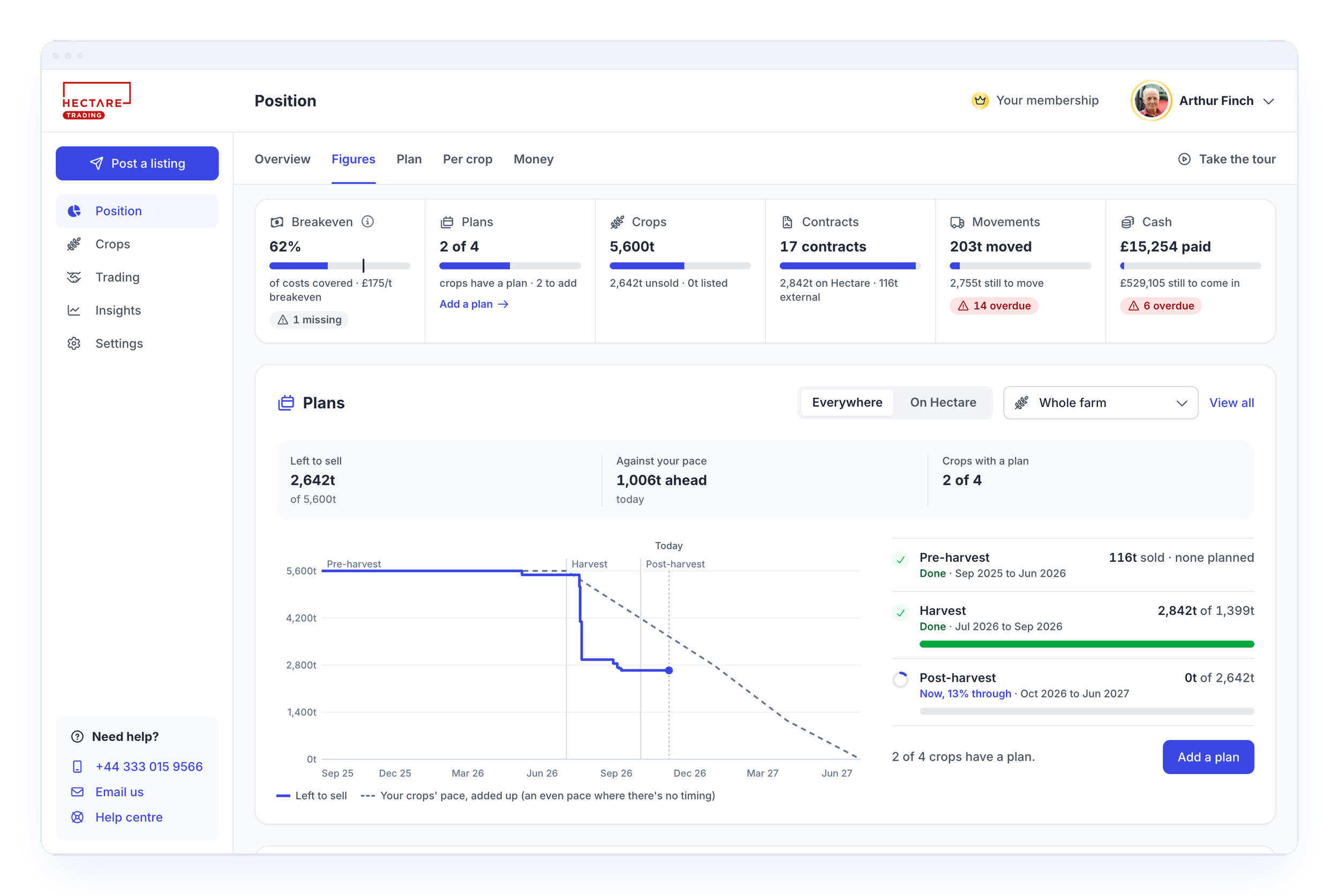
See whether your sales are keeping pace with your plan
Hectare Membership adds further detail, including county-level prices, extended price history, personalised prompts when crops reach target prices, and detailed movement, payment and delivery tracking.
Make it part of your daily routine
Grain marketing requires constant attention to your position, not just an occasional glance at the market. It needn’t be time-consuming – a simple daily check-in can help keep you in command.
Whether you’re currently intending to sell or not, your overall grain marketing position is changing all the time. Prices move, contracts progress, payments fall due and the balance of sold and unsold grain shifts.
If you know exactly where you stand right now, you can make better, more informed decisions about when and how to market your grain.
Take a look at your own live grain overview today – based on local market prices.
Whether you’re looking to move the rest of your 2026 crop or lock in prices on your 2027 crop, post a listing and see what buyers are paying in your region.
This article is for general information only and does not constitute advice. While we make every effort to ensure the accuracy of the content at the time of publication, Hectare Trading makes no guarantee regarding the data provided.