
2-MINUTE READ
Milling wheat prices remain considerably higher than a year ago, but the premium over feed wheat has all but disappeared. For growers holding quality grain, the question is whether that premium will recover or whether the current market offers a better opportunity to sell.
Hectare Trading’s benchmark East Midlands ex-farm spot prices for feed wheat and Group 1 milling wheat show just how sharply the differential has changed.
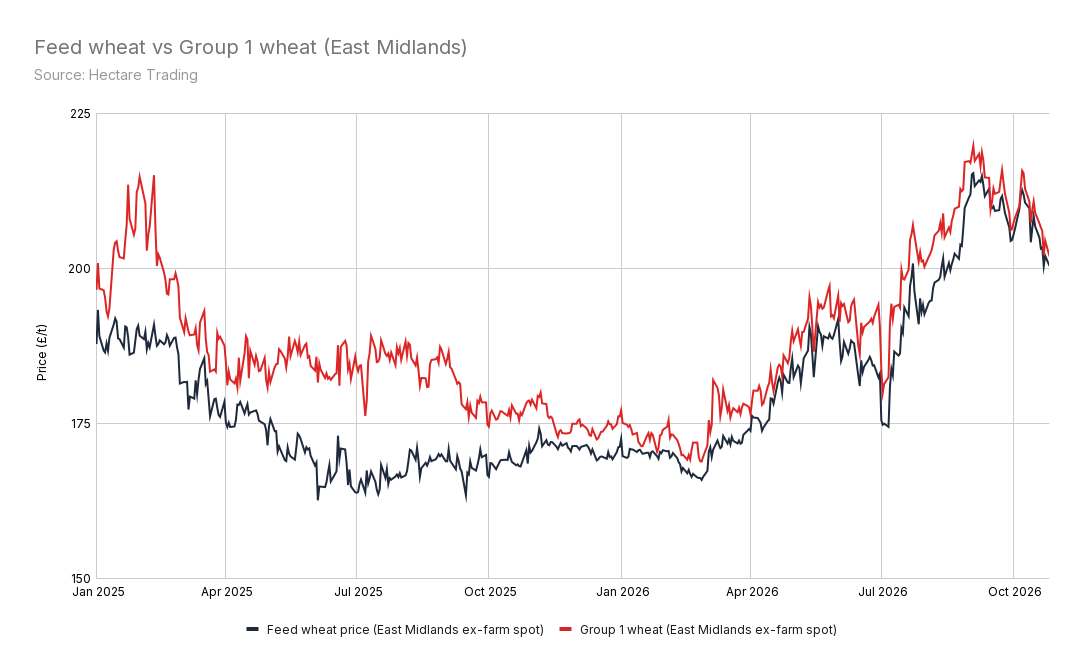
Milling premiums have tightened over the past year
In early 2025, milling premiums exceeded £25/t, regularly remaining above £20/t through the summer. But the gap began to narrow around a year ago, falling to a monthly average of just £7.91/t by October 2025.
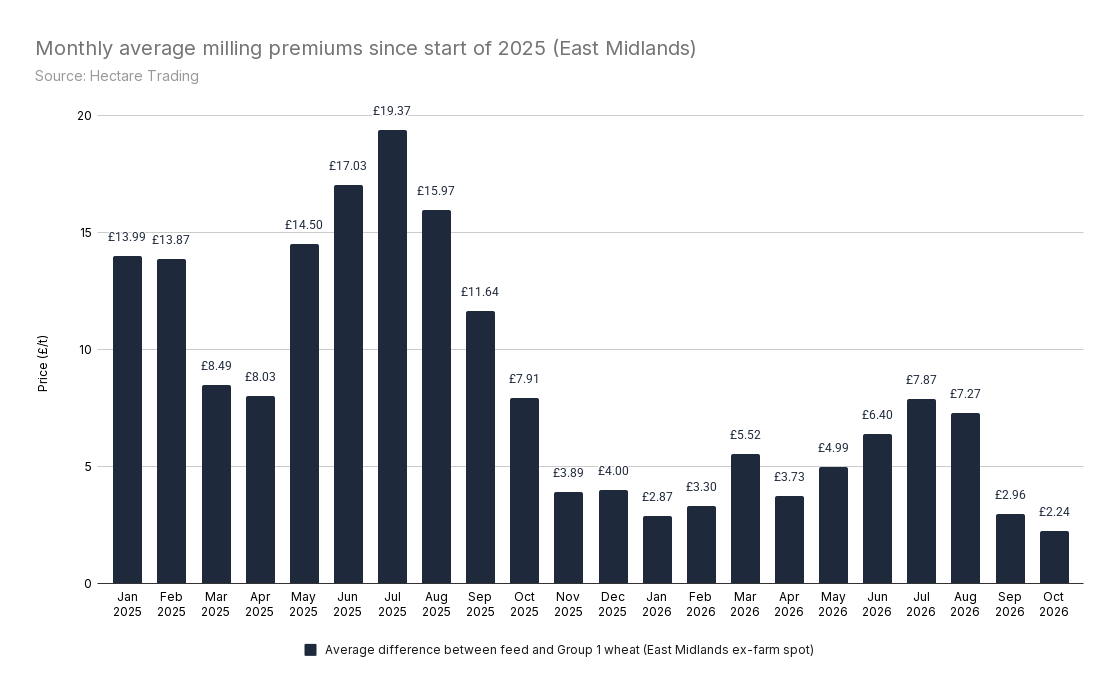
Monthly average premiums have shrunk to a little over £2
By January 2026, the monthly average premium had dropped further to £2.87/t. There was some recovery over the summer, but that proved short-lived. In October so far, the average premium stands at just £2.24/t.
Quality wheat is less scarce
The main driver is the quality of the 2026 UK harvest. Exceptionally good milling wheat quality has left millers well covered, reducing the need to compete aggressively for grain that meets their specifications.
While physical demand from mills remains good, strong demand does not automatically translate into a substantial premium for growers. High road haulage rates are also eroding ex-farm prices, particularly for farms further away from major milling hubs.
For growers, this makes it increasingly important to compare local prices rather than national benchmarks. Transport costs can significantly reduce the advantage of quality wheat over feed wheat.
Futures point to a premium for nearby supply
The wider European market offers another perspective. Since mid-July, Paris milling wheat futures have traded in an old crop/new crop inversion, with nearby contracts priced above those for the following harvest.
In early June, the September 2027 contract was around €10/t higher than December 2026. By early September, it had swung to nearly €15/t below the nearby contract. This pattern has continued through September and into October.
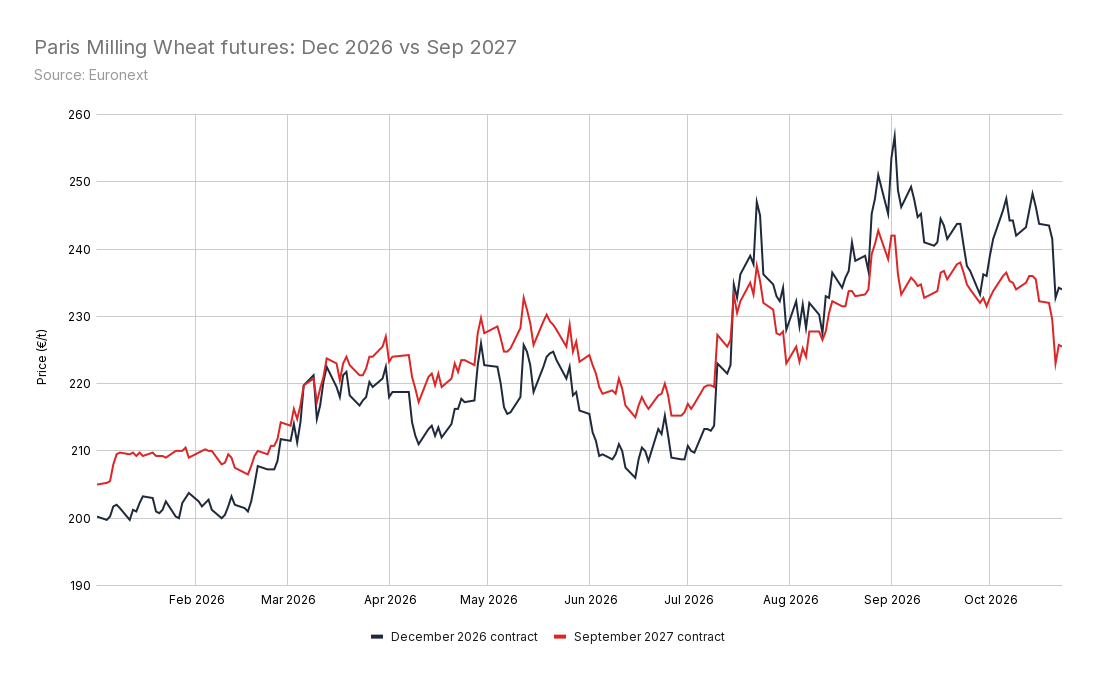
Paris milling wheat futures show an old crop/new crop inversion
The inversion suggests the market places greater value on available milling wheat supplies than on expected production from the 2027 harvest. In other words, nearby availability carries a premium, even as expectations for next year’s global crop weigh on later-dated prices.
What does this mean for growers?
For growers with quality wheat in store, the decision should come down to the net return on offer, storage costs and the risk of waiting for a better premium. The current futures inversion highlights the value the market places on nearby supply, but it does not guarantee that local milling premiums will recover.
The key is to market the grain you have, not the premium you hoped for. Compare current milling and feed offers, account for haulage and storage, and weigh the value of selling now against the cost and risk of holding out for a better return.
Check your current local prices for feed and quality wheat on Hectare Trading. If you’ve got grain to sell, post a listing and see what buyers are prepared to pay.
This article is for general information only and does not constitute advice. While we make every effort to ensure the accuracy of the content at the time of publication, Hectare Trading makes no guarantee regarding the data provided.