
3-MINUTE READ
From a grain merchant’s perspective, buying grain is not simply a matter of finding the cheapest load. They are also looking for a seller they can dependably do business with.
Merchants are making commitments to flour mills, feed manufacturers and processors that rely on grain arriving on time, meeting specification and being delivered without complications. The lower the risk for the buyer, the more confidently they can bid.
So what makes a seller attractive to grain merchants?
Reliability is valuable
The price might secure the deal, but reliability is what builds long-term relationships.
For buyers, the ideal seller is someone who does exactly what they agreed. If grain is sold for a particular movement period, they can load when required. If transport is booked, the load is ready. If something changes, they communicate early so alternative arrangements can be made.
That reliability matters because merchants are often buying grain against existing commitments. A missed collection or unexpected delay doesn’t just affect one transaction – it can disrupt deliveries further down the supply chain.
This reliability works both ways. Buyers value suppliers who are flexible when genuine issues arise, and the best relationships are built on mutual trust rather than one-sided demands.
As wheat trader Nick Matthews said in our interview in February, “That’s the perfect deal – the seller is somebody where, if things go wrong, they will be a bit flexible, and we are flexible with them.”
Know exactly what’s in the store
Good sampling can make the difference between an easy sale and an expensive problem.
Buyers place huge importance on representative samples and accurate quality information. Taking proper bulk samples, mixing them thoroughly and sharing consistent results gives merchants confidence that grain will meet specification when it reaches its destination.
Maintaining grain condition, monitoring temperature and managing storage properly will also reduce the risk of quality deteriorating before movement.
Surprises cost everyone money. The more confidence a buyer has in your grain quality, the easier it is for them to find the right home for your grain and avoid costly rejections or claims further down the line.
See the market through the buyer’s eyes
Edd Britton from Robin Appel recently outlined to us how finding reliable growers is “gold” for any grain business as strong supplier relationships are essential for merchants to grow.
Watch on YouTube: Edd Britton on how Robin Appel uses Hectare Trading
It’s easy to think of a grain sale as a straightforward transaction between farmer and merchant. In truth, every purchase sits within a much bigger supply chain.
Merchants are balancing customer contracts, haulage, storage, quality specifications and delivery schedules, often across multiple end users. Understanding those pressures helps explain why prices can vary from one buyer to another, even for very similar grain.
The more information you can provide, and the more confidence you give buyers that the grain will arrive exactly as expected, the easier it becomes for them to place competitive bids.
Make it easy to do business
Sometimes it’s the small details that separate a good supplier from a great one.
Being easy to contact, responding promptly to enquiries and being clear about loading availability all help buyers plan movements efficiently. If there are restrictions around harvest, staff availability or busy periods on the farm, discussing them early avoids problems later.
None of this means making life easier for the merchant at your own expense. It simply removes uncertainty, allowing both sides to plan with confidence.
Using Hectare Trading to stand out
By accessing a large network of buyers through Hectare Trading, you have the opportunity to build long-term relationships with a range of buyers, rather than relying on one or two.
As well as providing detailed crop listings, consider the tonnage you are offering. Larger tonnages help merchants manage supply against their contracts more easily. This desirability can encourage competition between buyers and push prices higher.
Across all wheat listings on Hectare Trading in 2025, the average number of bids per listing increased consistently the larger the tonnage, while the average price achieved per tonne also increased for larger tonnages.
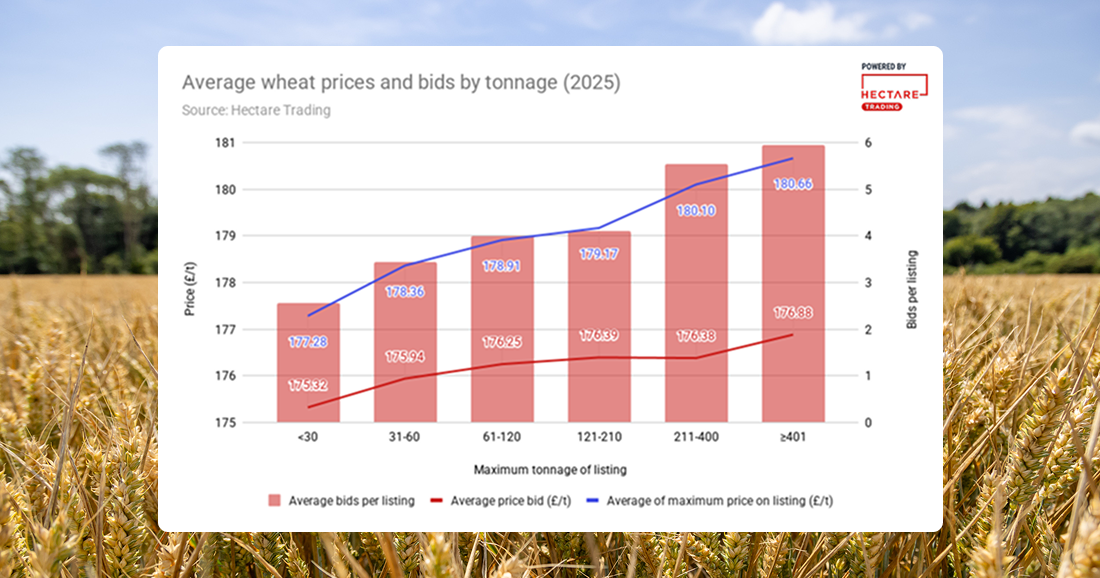
Larger tonnages have consistently led to more bids and higher prices on average
Also, by offering a broader range of movement months, or movement outside of periods when supply is abundant, you can make your listings more appealing to buyers.
Consider adding in your listing notes that you can move in quieter periods, for example, late or early in the day, or over a weekend or holiday period.
Trust opens more opportunities
Of course, the market will always be driven by supply and demand. But when buyers have confidence in a seller, they’re in a stronger position to compete for your grain when they need it.
No farmer can change where their farm is located or what the market is doing. But every seller can reduce the uncertainty that buyers have to price into a transaction, by:
Providing reliable quality information
Being available to load grain promptly
Keeping clear communication throughout
Understanding the buyer’s point of view
Being flexible on tonnage and movement
In a competitive market, becoming known as a dependable seller is another key way to strengthen your grain marketing and increase your selling opportunities.
Access new buyers today. Post a free crop listing and see how much you can get for your grain – with no obligation to sell.
This article is for general information only and does not constitute advice. While we make every effort to ensure the accuracy of the content at the time of publication, Hectare Trading makes no guarantee regarding the data provided.