
3-MINUTE READ
Cereals 2026 begins with farming on the front page due to rising food prices, concerns over UK food security and the ongoing profitability challenge for UK farmers.
Reports that the UK government has explored voluntary price caps on bread, milk and eggs have reignited the debate over food affordability – with the prospect of farmgate prices being squeezed ever further.
While supermarkets pushed back against such measures, the discussion highlights a broader challenge facing the agricultural sector: how can farmers continue to produce affordable food while managing rising costs and maintaining profitable businesses?
The issue is particularly acute for arable farmers. The UK is reliant on imports for around 40% of its food, while domestic producers face increasing pressure from higher fertiliser and fuel costs, unpredictable weather patterns and volatile commodity markets. With profitability under strain, many farmers are looking for practical solutions that can improve resilience and protect margins.
Against this backdrop, Cereals 2026 will bring together farmers, agronomists, manufacturers and industry experts on 10 and 11 June at Diddly Squat Farm, Chipping Norton, for two days focused on the future of UK arable farming.
The seminar programme will tackle some of the most pressing issues facing agriculture today, including regenerative farming, changing legislation, farm finance, succession planning and farm safety.
Visitors can explore working machinery demonstrations and compare the latest technology designed to improve efficiency and productivity.
Crop plots will showcase a wide range of varieties. With many regions experiencing significantly below-average rainfall this season, the search for crops that can withstand increasingly challenging growing conditions will be high on many farmers’ agendas.
Farmers Weekly will also be hosting its popular Question Time sessions across both days, while its regular podcast will be recorded live at the event on Wednesday afternoon.

Find us at Cereals 2026 at stand 719
Managing risk in volatile markets
While agronomy and technology remain central to farm performance, marketing crops effectively has become increasingly important as margins tighten.
In the milling wheat market alone, ex-farm spot prices in the UK have moved between £173/t and over £198/t on Hectare Trading over the past year, with an average price around £182/t.
Selling at the wrong point in the market can have a substantial impact on your returns. For instance, selling 2,000 tonnes of milling wheat at the bottom of the market would have cost you around £18,000 compared to selling at the average price.
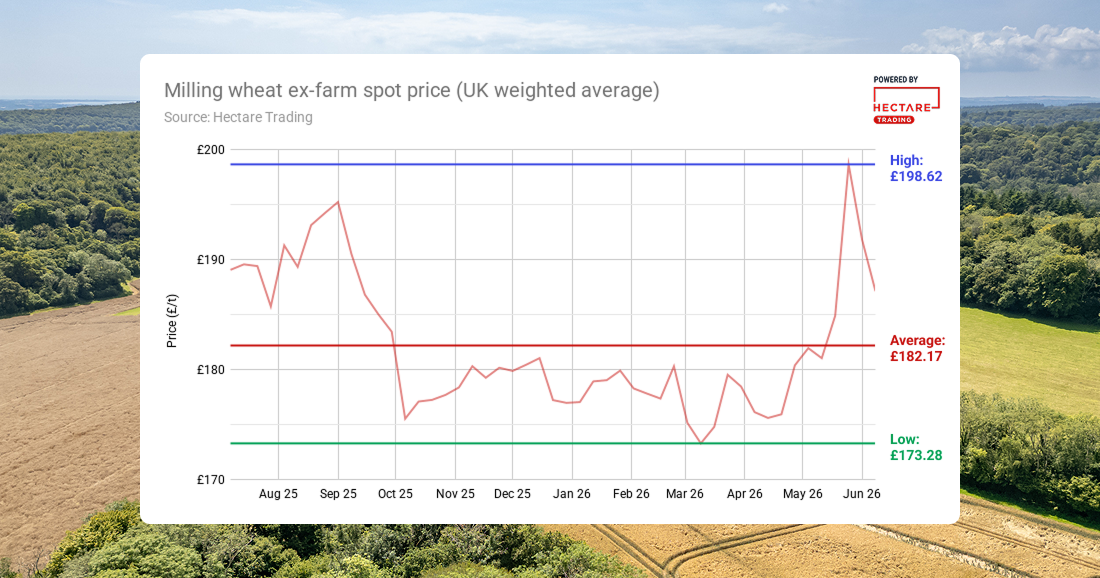
UK milling wheat prices have varied considerably over the past year
As a result, many farmers are adopting more structured marketing strategies that spread sales throughout the year and focus on managing risk rather than attempting to predict market highs and lows.
The role of digital marketing tools in helping farmers make better selling decisions will be the focus of a panel discussion hosted by Hectare Trading on the Seed to Shelf Mainstage.
“The future of grain marketing”
The session will take place at 9.30am on Wednesday 10 June and again at 11.30am on Thursday 11 June, bringing together:
James Peck, Managing Director of PX Farms
Ryan McCormack, Dennington Hall Farms, Farmers Weekly’s Farm Manager of the Year 2025
Andrew Huxham, Up Marden Farms, co-founder of Hectare Trading
Lizzie Blower, Head of Trading at Hectare Trading
The discussion will examine how farmers can use technology, market intelligence and structured selling strategies to improve returns in increasingly uncertain markets.
Even relatively simple grain marketing decisions can make a significant difference to farm profitability.
For instance, farmers using Hectare Trading have achieved an average price boost of £5.35/t on feed wheat by comparing multiple buyers (judging by the difference between the highest and lowest bids received).*
Again, if you’ve got 2,000 tonnes of grain to sell, that equates to more than £10,000 of additional income – simply by shopping around on an online marketplace.
At a time when weather challenges, rising input costs and geopolitical uncertainty continue to squeeze margins, opportunities to improve returns without increasing production are attracting growing interest across the sector.
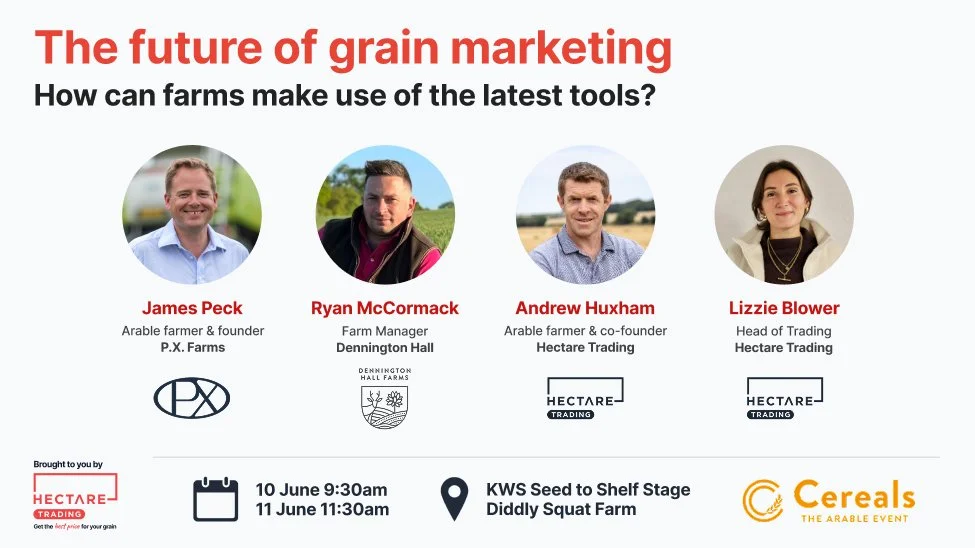
Come to our panel discussion at Cereals 2026
Looking ahead
The challenges facing UK agriculture are unlikely to disappear anytime soon. As always, farmers must balance the demands of maintaining profitability and adapting to environmental and regulatory change.
Cereals 2026 offers an opportunity to explore the technologies, strategies and tools that can help meet those challenges.
Whether the focus is improving crop resilience, increasing operational efficiency or securing better grain prices, this year’s event promises practical insights for arable businesses looking to thrive in an increasingly complex farming environment.
Are you at Cereals 2026? Stop by stand 719 and say hi to our team.
Want to see how much more you could make for your grain by shopping around? Post a free listing on Hectare Trading today.
*Hectare Trading data: 20/11/23–01/06/26.
This article is for general information only and does not constitute advice. While we make every effort to ensure the accuracy of the content at the time of publication, Hectare Trading makes no guarantee regarding the data provided.