
The role of data in modern grain trading
2-MINUTE READ
You already use data to make better decisions in the field. The same approach can help achieve stronger margins when it comes to selling your grain.
Modern arable farming is a data-rich business. GPS guidance, yield mapping, precision application and farm management software all help you understand what is happening in your fields and make more informed decisions.
But when the crop leaves the field, that data-driven method can sometimes give way to something rather more traditional: a quick look at last year’s price, a call to a familiar buyer or a decision based on where the market has moved that morning.
So how can you take a similarly modern, data-led approach to your grain marketing?
Start with your own numbers
The first piece of the puzzle is understanding what you actually need to achieve.
Knowing your true cost of production and breakeven price gives you a much stronger basis for making marketing decisions. Combining fixed and variable costs with realistic yield scenarios can show what price you need to achieve across different crops and fields.
Then, as harvest progresses, actual yield data can replace pre-season estimates. Knowing exactly how much grain has been harvested – and how much remains in store – makes it possible to build a marketing plan around your own position rather than relying on national production figures.
A live position dashboard like Crops can take this a step further, bringing together sold, unsold and remaining tonnes while tracking the weighted average price achieved against your targets.
The objective isn’t to sell everything at the highest price of the year. It’s to build a selling strategy that gives you a strong weighted average price while managing risk and cash flow.
Look beyond the headline market
Market data is just as important, but not all price information tells the same story.
ICE Feed Wheat futures are useful for understanding broader market direction and forward carry. But they relate to specific contract months, focus on one crop type and don’t necessarily reflect what a buyer will pay for physical grain in your area.
AHDB Corn Returns provide valuable information for a few different crops, but their sporadic reporting across broad regions means they can be behind the market when prices are moving quickly.
Live regional physical prices fill that gap. Tracking real-time ex-farm prices by region – or even by county with the Hectare Membership – can reveal where local supply and demand are creating opportunities that aren’t immediately obvious from national futures.
For example, if we compare Hectare Trading’s benchmark East Midlands ex-farm spot price for feed wheat to the nearby futures contract, we can see a marked discrepancy over the past year.
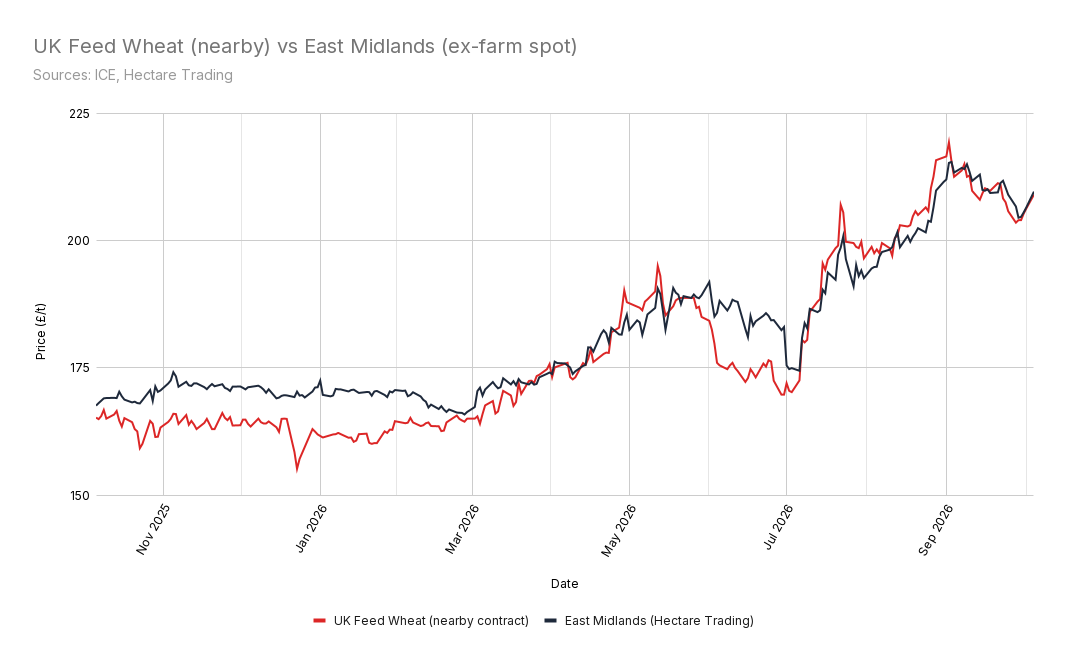
Regional ex-farm spot prices offer a greater degree of precision
Isolating the difference, we see that the East Midlands has regularly been trading feed wheat at a premium of more than £6 per tonne over the nearby futures price, and even as high as £15.16.
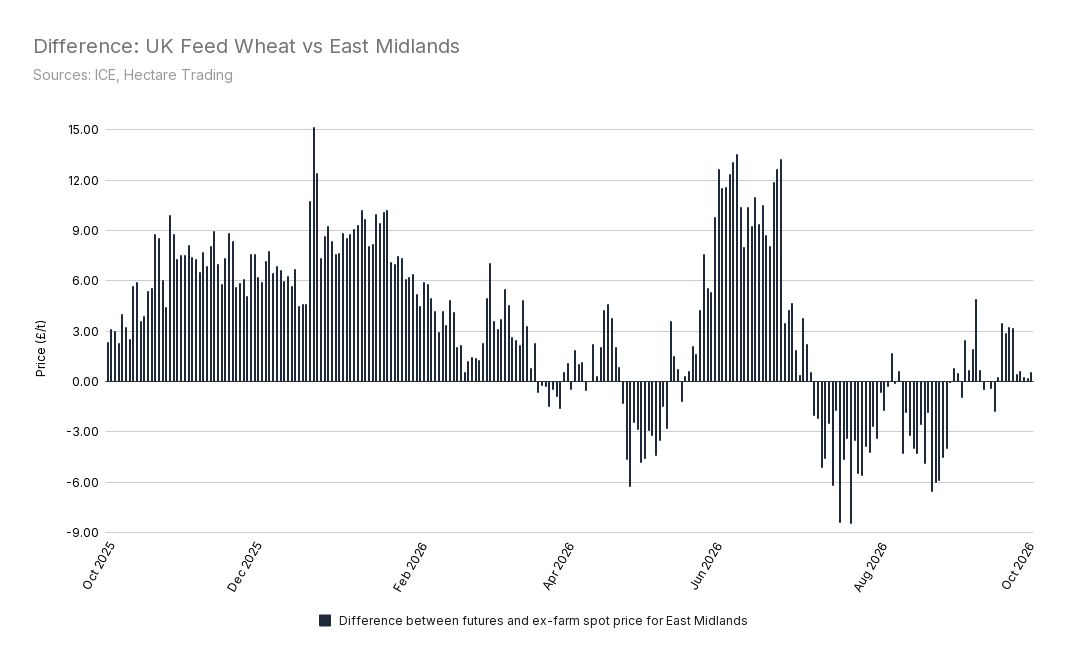
Price data analysis identifies regional deviations from national benchmarks
The market isn’t just one price. Location, timing, specification and demand all influence what your grain is worth.
Buyer competition adds another layer – and this is where data can improve your execution too.
Using an online marketplace like Hectare Trading, you put your grain in front of multiple active buyers. Instead of accepting a single quote, you create a competitive market for your crop.
From yield to profit
You wouldn’t invest in new machinery or other on-farm tech without expecting better returns. Grain marketing deserves the same attention.
Data won’t tell you exactly when the market will peak – nobody can. What it can do is replace guesswork with a clearer view of your own position, the market around you and the opportunities available.
The result is a more disciplined approach to selling: know your numbers, understand your market, create competition – and execute when the opportunity fits your plan.
Check out the valuable market insights on Hectare Trading today. You can also test out our new premium insights – including county-level prices, 365-day trends and carry analysis – with a free trial of the Hectare Membership.
And if you’ve got grain to sell, why not post a free crop listing and see what buyers are currently prepared to pay?
This article is for general information only and does not constitute advice. While we make every effort to ensure the accuracy of the content at the time of publication, Hectare Trading makes no guarantee regarding the data provided.