
Managing risk in volatile grain markets
2-MINUTE READ
Heatwaves, geopolitical escalations in Ukraine or Iran, a change in trade policy or a sharp movement in sterling – all can move prices in a matter of hours. The challenge for arable farmers is that margins are often under pressure at the same time.
In a volatile market, it can feel like you’re constantly gambling on events. So how can you shift from speculation to strategy to protect your margins?
When every pound per tonne matters, grain marketing deserves the same attention as seed choice, fertiliser rates or crop protection. You cannot control the market, but you can control how you respond to it.
Production risk and market risk
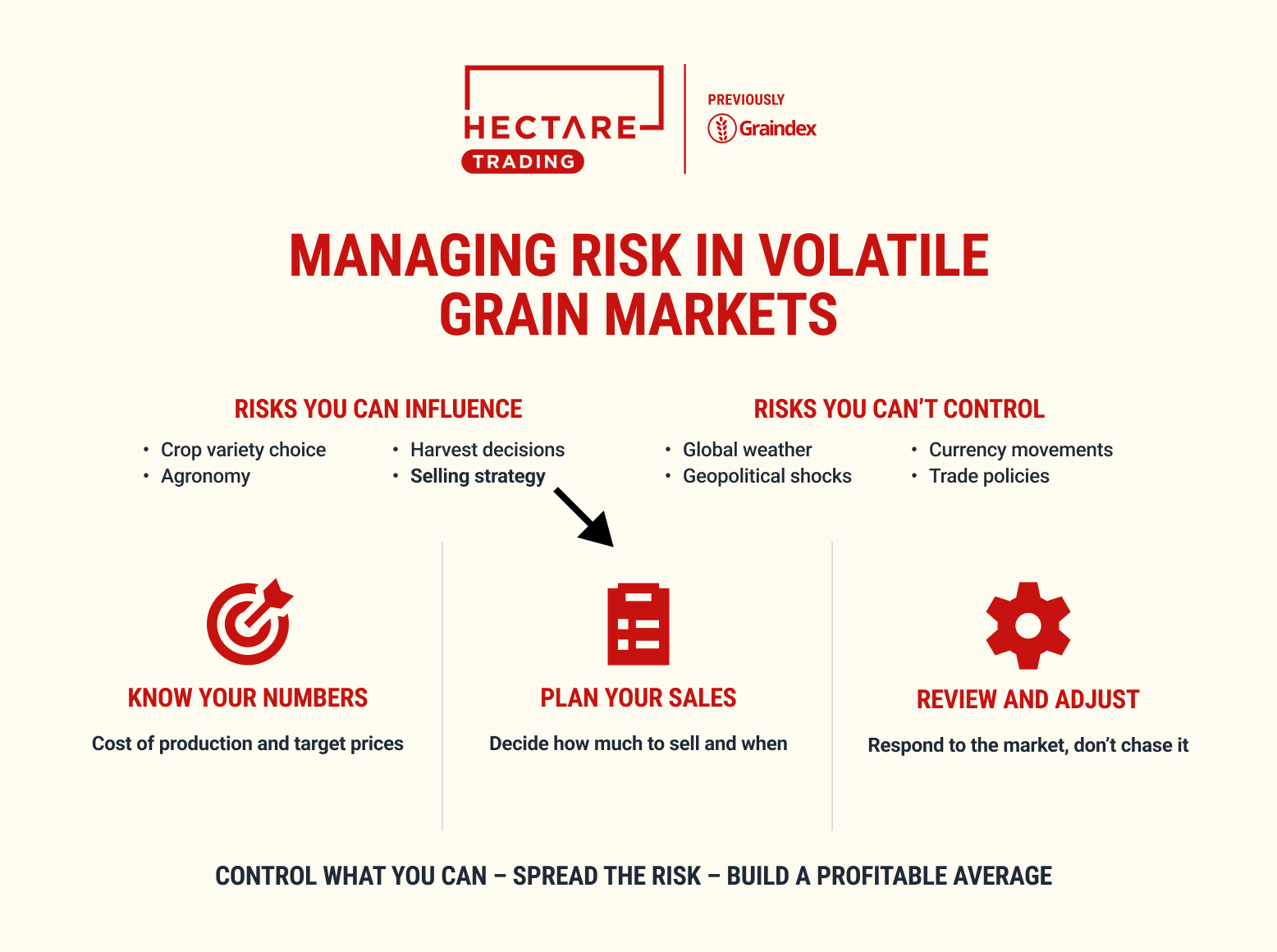
Some risks can be influenced on-farm. Crop variety choice, agronomy and harvest decisions can all improve the chances of producing the crop you planned for, although the weather will always have the final say.
Market risks are different. No individual farmer can control global production, currency movements, international trade or geopolitical events. Trying to predict exactly how these factors will affect prices – and then selling everything at the perfect moment – is speculation.
A more practical approach is to focus on securing a profitable average price.
Spreading the risk
Forward-selling is one way to take some price risk off the table. Selling part of an expected crop before harvest – or, in some cases, even before drilling – can establish a financial baseline and provide greater certainty when planning cash flow.
It’s never too early to look ahead to the next harvest year and start planning your selling schedule.
That does not mean committing the entire crop at once. Selling smaller tranches at different points through the season can build a weighted average price.
Some sales will inevitably look better than others in hindsight, but the aim is not to win every transaction. It is to avoid having the whole crop exposed to one bad moment in the market.
This approach can be particularly valuable when prices fall sharply. A proportion of the crop will already have been sold, reducing the impact of a sudden collapse on the farm’s overall return.
Don’t ignore specification risk
Forward-selling can feel more difficult with quality-sensitive crops such as group 1 milling wheat or malting barley. The concern is understandable: what happens if the crop fails to meet specification?
Flexible contract structures can help manage that uncertainty. A feed base contract, for example, can secure a feed price while adding an agreed premium if the crop achieves milling or malting specification.
Alternatively, a premium-only contract can establish the quality premium in advance while leaving the underlying feed price to be fixed later.
The right option will depend on the crop, the contract terms and your own appetite for risk, but the principle is straightforward: quality uncertainty does not necessarily mean doing nothing.
Control what you can
You cannot control the weather in another hemisphere, the latest geopolitical shock or the direction of sterling. But you can control how much grain you are prepared to sell, when you review your position and the prices that meet your financial requirements.
A written marketing plan helps turn those decisions into a process rather than an emotional reaction to the latest market movement. Know your costs, identify prices that work for the business and spread sales across the marketing year.
You may never sell at the very top of the market. But consistently securing a profitable average price is a far more valuable goal – and a much stronger foundation for long-term resilience.
Post a crop listing today. It’s free of charge and you can set your own review time – with no obligation to sell.
This article is for general information only and does not constitute advice. While we make every effort to ensure the accuracy of the content at the time of publication, Hectare Trading makes no guarantee regarding the data provided.